
silent sunday
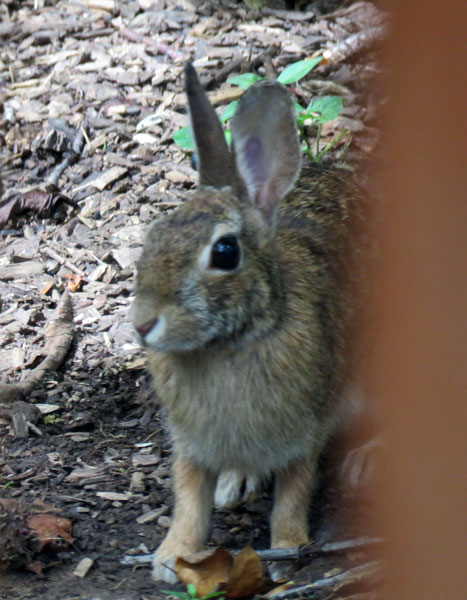
It’s been a while! We moved into our new place a couple of weeks ago and then the POD arrived with all our worldly goods a week after that. Dima & Larisa and a couple of their friends unloaded the POD on that hot afternoon. The next day friends and relatives came by and got us started reassembling bookcases, etc. We’ve been unpacking and taking empty cardboard boxes to the recycling center ever since.

We found a lovely little one-story townhouse to lease. The neighbors are so welcoming! Next door is a woman who also moved down here to be near her grandchildren. Another neighbor came over with a homemade pecan pie to introduce herself. And another brought sunflowers and cherry tomatoes from the farmers market!

I’m loving having everything on one floor. And we’re located close to our grandchildren, a six-minute drive away. 🙂 We are nestled into a cul-de-sac in a very quiet and heavily wooded neighborhood. There are so many trees here, and so much wildlife, that I decided to change the name of my blog to In the Woods!

It’s hot, too, as expected. The other day the heat index reached 103°! But we’re grateful for the central air conditioning. With dewpoints in the 70s every morning we probably won’t be taking any walks for a couple of months.


The above picture was taken from our front porch, looking up. Moving from a noisy city to this peaceful neighborhood has been such a blessing. And now I’m looking forward to settling in and then catching up with my blogging friends as soon as possible!

Monday we were planning to check on mama goose but my gut was having a very bad morning. My sweet husband offered to go by himself to see if there were any goslings, and brought back the picture above. No little ones yet and he reported that papa goose was still missing. He went inside the nature center and inquired about the situation. A staffer said they were concerned about the avian influenza but had no answers.
By late afternoon I was feeling a little better and decided to go down to the salt water and air for some healing energy. The first wildflower of the season at the beach, a dandelion, was poking through the stone wall and concrete!

When we got down on the sand a friendly ring-billed gull came over to to see what we were up to. I must have taken 30 pictures of him as he enjoyed our company, and we his. There was not another gull on the beach. I thanked him for the lovely pictures with the sand as a backdrop, rather than the ugly tar of the parking lot. 🙂


I never get tired of communing with my beloved gulls. But with a quick glance out over the breakwater I spotted a common grackle. I don’t think I’ve ever seen one at the beach before.

On the way home I suddenly remembered that the weeping cherries were probably blossoming more fully than when we saw them the week before. So off we went. It was a lovely scene, complete with creeping phlox, a patch of heather, and a robin.


We stopped by the grocery store and picked up some salmon for supper and felt grateful for a pleasant end to the day.
Tuesday morning we decided to check on mama goose again. Good news! Papa goose was back, along with his buddy the mallard!


I just LOVE this picture Tim took of papa goose! I don’t think we’ll have a chance to check again until Friday. Hope we don’t miss the hatchlings…

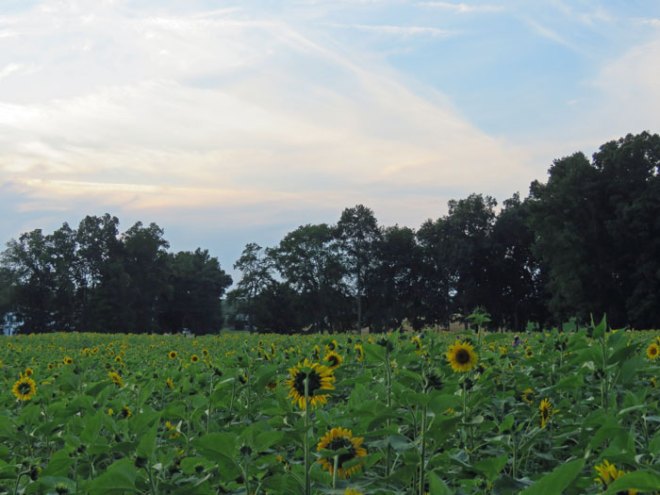
So, last year we visited the sunflower field at the end of the harvest and I got a lot of pictures of blossoms past their peak, all still beautiful in their own way. This year we changed things up and went on the first day day of the gathering in and at a different time of day, evening instead of morning. Also unlike last year we’ve had plenty of rain while last summer we were dealing with a drought.

Each year we plant over 14 acres of sunflowers and harvest approximately 300,000 blooms for your viewing pleasure and to benefit the Make-A-Wish Foundation of Connecticut, a non-profit organization dedicated to granting wishes to children with critical illnesses. Sunflowers are available while supplies last. We offer cut your sunflowers with a $2 per flower donation to the Make-A-Wish Foundation of Connecticut.
~ Buttonwood Farm website

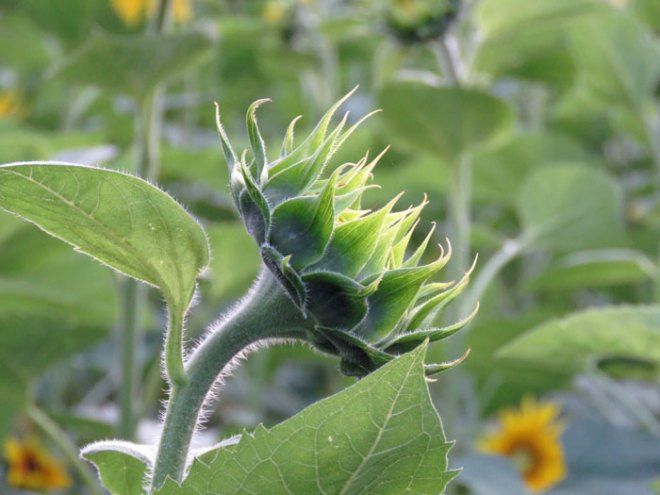
There’s a small hill to climb to get a pretty view over a large field and then several paths to follow through the sea of sunflowers. This year I became fascinated with all the blossoms getting ready to bloom and wound up taking more pictures of them than the ones at their peaks!


The crop must drink; we move the pipe
To draw the water back in time
To fall again upon the field,
So that the harvest may grow ripe,
The year complete its ancient rhyme
With other years, and a good yield
Complete our human hope.
~ Wendell Berry
(This Day: Collected & New Sabbath Poems)




When celebrating, always take your cue from nature and adapt your rituals to circumstances. … Adapting to circumstances, like actively observing on your walks, brings you into rhythm with the natural world. And soon, checking in to a festival becomes second nature, as you remember past experience. … May the spiral of our seasonal journey be blessed.
~ Penny Billington
(The Path of Druidry: Walking the Ancient Green Way)



Can you tell we’re under the flight path from New York to Europe?
It’s hard to believe that a year has passed and we’re still struggling with the coronavirus pandemic, in spite of being fully vaccinated. The delta variant is running rampant through the stubbornly unvaccinated population, but the concerning part is that even the vaccinated are at risk now. Here in Connecticut we’ve had 854 vaccinated people with breakthrough COVID cases, and 150 of them are hospitalized. We’re back to wearing masks in the grocery store and many indoor places, like our doctors, are still requiring them. So much for eating inside our favorite restaurant for a while… It’s a good thing we’ve gotten used to finding things to do outside!

One of Tim’s friends told us about this lovely park. This bridge goes over the overgrown tracks of the Norwich & Westerly Railway.
The Norwich and Westerly Railway was an interurban trolley system that operated in Southeastern Connecticut during the early part of the 20th century. It operated a 21-mile line through rural territory in Norwich, Preston, Ledyard, North Stonington, and Pawcatuck, Connecticut to Westerly, Rhode Island between 1906 and 1922. For most of its length, the route paralleled what is now Connecticut Route 2.
~ Wikipedia

It’s a blurry picture but I was so excited to finally see a Carolina wren in Connecticut. I first heard its pretty song and saw a few of them while at my daughter’s home in North Carolina in the fall of 2018. I’ve been hearing them sing in the spring and fall since returning to to Connecticut but haven’t been able to spot one until this day.


A “Natural Stone Throne” was indicated on the map but we almost missed it behind all the brush. Tim bushwhacked his way up a steep incline and got the above picture on his cell phone. I wasn’t about to follow but then he noticed a cleared trail joining the main trail a little ahead of where I was. So I walked around and up and got the following two pictures. I made one attempt to climb up and sit on it but it was too high to pull it off!


We proceeded up the hill and found ourselves at eye level with the top of the 23-story Grand Pequot Tower at Foxwoods Resort Casino, a mile and a half away (2.4 km).


A little farther along we got to the end of the trail at High Ledge Overlook. Thank goodness there was a fence marking the edge. It was a long way down. And then we turned around and noticed different things on our way back down the hill.


How little there is on an ordinary map! How little, I mean, that concerns the walker and the lover of nature…. The waving woods, the dells and glades and green banks and smiling fields, the huge boulders, etc., etc., are not on the map, nor to be inferred from the map.
~ Henry David Thoreau
(Journal, November 10, 1860)

After a bitter cold snap we managed to get out for a good walk on Wednesday. Another new place for us. This time I brought my father’s cane to use as a walking stick so I wouldn’t have to find one in the woods. It fit perfectly and had a good energy! Papa was very fond of his cane because his father had carved it and used it. (A couple of pictures of him with it here.)

Our daughter-in-law mailed us our old camera a couple of weeks ago so I could see how it compares to the one I’ve been using for several years now. But so far I haven’t felt inclined to pick it up so Tim took it along on this outing. It was fun with both of us having a good camera.


We were looking for the remains of a famous huge oak tree in the woods here. Before long we spotted the sign and were saddened to see just how very little was left of it.

During the summer of 1969, the gypsy moth defoliated an estimated 260,000 acres of trees in northeastern woodlands — more than triple the defoliated acreage of 1968.
~ Ralph L. Snodsmith
(The New York Times, April 19, 1970)

The famous oak didn’t survive the gypsy moth assault in 1969. Fifty-one years later this is all that is left of it:


My feet will tread soft as a deer in the forest. My mind will be clear as water from the sacred well. My heart will be strong as a great oak. My spirit will spread an eagle’s wings, and fly forth.
~ Juliet Marillier
(Daughter of the Forest)

We continued walking and found a historical cemetery.


Within this park are more trails and the Nathan Lester House & Farm Tool Museum, presumably the home of the chickens. We will have to wait to explore when the pandemic is over.

Because of the winter storms we hadn’t had a real walk in the woods in over a month. “Get out there!” my favorite TV weatherman advised on Wednesday morning. We opened the door and the birds were singing and it felt like a spring day at 45°F (7°C). Most of the snow had melted. So we headed out to a new park for us, the Hewitt Farm in North Stonington.

This 104-acre park and recreation area was purchased by the Town of North Stonington in 2008 for the enjoyment of its residents and visitors to the region. The property consists of forests, fields, wetlands and streams; more than a mile of hiking trails, including the town’s Bicentennial Trail; the Shunock River; 3.5-acre Lower Hewitt Pond and dam; and several structures. The dam originally provided water-power to John Dean Gallup’s woolen mill located nearby.
~ Hewitt Farm Trail Map

We took the Bicentennial Trail. It felt so good to be outside with a just a sweatshirt and no gloves needed! We walked for an hour and a half, up a hill to Tipping Rock, a huge glacier erratic that didn’t disappoint. From the top of the hill we could see the wooded landscape 360° all around us. But there was also lots to see along the way.


For most of us knowledge comes largely through sight, yet we look about with such unseeing eyes that we are partially blind. One way to open your eyes is to ask yourself, “What if I had never seen this before? What if I knew I would never see it again?”
~ Rachel Carson
(The Sense of Wonder)


Not sure how long the trail would be we were thinking of turning back but then we saw the sign. So we pressed on up the hill…


After much oohing and aahing we headed back down the hill. It was a lot easier and faster than climbing up, but we still paused to see a lot of nature’s delights.


About half way down we heard the delighful sounds of excited children approaching. Two mothers with two babies and four little ones between them were coming up the trail so we took our usual six-feet-off-the-trail position as they passed. We exchanged pleasant greetings. They were wondering about the ladder…

We were so happy to be out and about, as much as is possible, during the pandemic. Tim got his first shot on the 17th. Next one scheduled for March 17. My age group opens up on Monday but it may take a while to get an appointment because there are a lot more people in my age group than there are in Tim’s.

Inside their skulls, the sophistication of the neural capacity of black-capped chickadees increases in autumn. The part of the brain that stores spatial information gets larger and more complex, allowing the birds to remember the locations of the seeds and insects that they cache under bark and in clusters of lichen. The superior memory of the birds that I hear in the tips of the fir tree is a neuronal preparation for the hungry days of late autumn and winter. The seat of spatial memory in the brains of chickadees that live in these northern forests is particularly voluminous and densely wired. Natural selection has worked winter into the birds’ heads, molding the brains so that chickadees can survive even when food is scarce. Chickadee memories also live within societal relationships. The birds are keen observers of their flockmates. If one bird should happen on a novel way of finding or processing food, others will learn from what they see. Once acquired, the memory no longer depends on the life of any individual. The memory passes through the generations, living in the social network.
~ David George Haskell
(The Songs of Trees: Stories from Nature’s Great Connectors)
Chickadees were probably the first birds I became aware of when I was a little girl. They frequented my mother’s birdfeeder which was right outside our dining room window. (Our tiny Cape Cod style house didn’t have a breakfast room or eat-in kitchen.) I still remember eating my breakfast at the table in the winter and the cold blast of air that made me shiver when Mom opened the window to spread more seeds out onto the protected platform.
I remember playing out in the snowy winter woods with the chickadee fee-bee song playing in the background. And the well known chickadee-dee-dee alarm call. My father taught me to recognize their warning call, which I often hear out of the blue on our walks in the woods these days. My guess is we might be entering someone’s territory so we respectfully move on quickly.

For many winters now we’ve been hanging a suet feeder on our condo balcony to attract the woodpeckers I also love. Chickadees hang around and glean the seeds that fall out of the suet while the woodpeckers are feeding. Unfortunately starlings have figured out how to hang onto the suet feeder and they wreak havoc with their large numbers. Why can’t they come one or two at a time like the woodpeckers and chickadees? We also welcome a fair number of titmice, nuthatches and juncos.
Every winter our neighbor complains that the birds poop on his balcony. For this winter I had planned to not put out the suet feeder in the interest of being neighborly but, unbeknownst to me, my thoughtful husband bought a few months worth of suet cakes he found on sale. A woodpecker already came by the other day and was hanging onto the sliding glass door screen, inquiring within about the missing feeder, no doubt. And the chickadees have also been checking out the balcony, it seems to be much earlier than usual this year. I used to put the feeder out mid-October, after Columbus Day. But the fall colors have arrived two weeks early; perhaps the birds are ahead of schedule, too.
Because our neighbor goes out on his balcony to smoke a cigar and the unpleasant fumes come into our unit even when the windows are shut, we’ve mostly ignored his complaints about our bird feeding. Tit for tat. I have a funny feeling my resolve to not feed the birds this winter is crumbling. Watching them brings me so much joy in the winter! Maybe just one more winter, since we are in quarantine? I’m going around in circles weighing the pros and cons… I have to decide now!!!
Wish the bird feeding quandary was the worst of my worries. Connecticut College now has 24 students in quarantine, a cluster of 4 positive cases and their friends. One of the students was in my sister’s class a week ago. All her classes are outdoors and all her students are wearing masks, still, I worry about her safety. It’s a grim feeling, the virus keeps coming closer and closer…
And now our reckless president has tested positive for COVID-19.
